Yes, you can fix hollow core doors to look like solid wood without replacing them. The best approach combines surface preparation, quality wood veneer, trim molding, proper paint or stain, and premium hardware for a realistic finish.
Many homeowners upgrade interior doors because they want a richer appearance without paying for expensive replacements. According to the National Association of Home Builders, interior remodeling remains among the most popular home improvement projects, while energy efficient home updates continue driving renovation spending. This guide explains practical methods that create a convincing solid wood appearance while keeping costs manageable. Additionally, you will learn common mistakes to avoid and professional finishing techniques that produce lasting results.
Why Hollow Core Doors Look Different
Hollow core doors contain a lightweight cardboard or honeycomb interior covered with thin wood fiberboard. Therefore, they feel lighter and produce a hollow sound when closed.
Surface texture also makes these doors look inexpensive. However, adding decorative details and quality finishes dramatically changes their appearance. You can also explore ideas from Miami luxury style decor for premium interior inspiration.
If you want those new finishes and details to sit comfortably in a Miami home, it helps to understand how coastal warmth and modern lines work together. A stylist’s guide to blending coastal and modern interior design in Miami shows how to balance natural textures with clean contemporary choices, so your upgraded doors feel intentional rather than out of place.
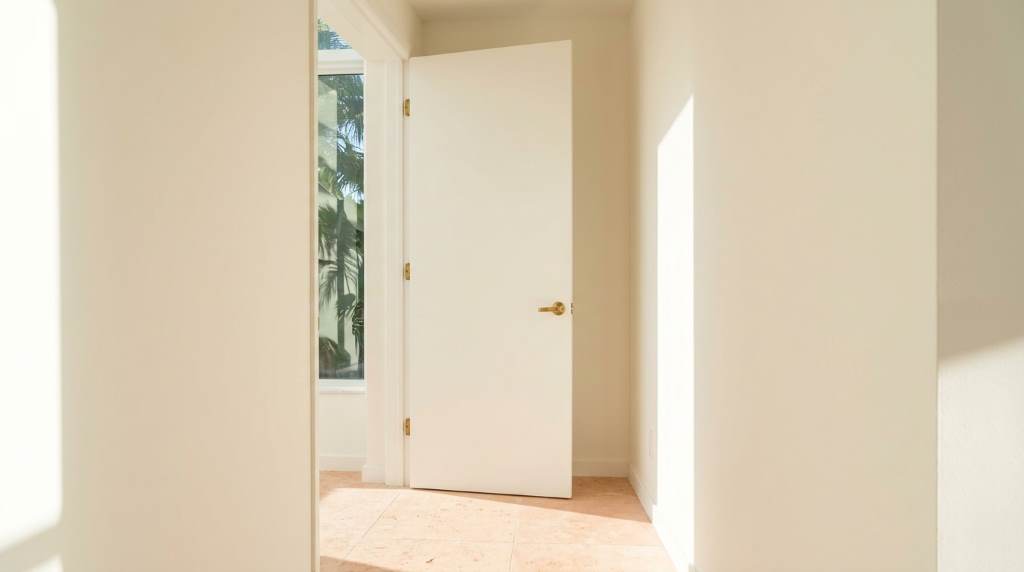
Main Differences Between Hollow And Solid Wood Doors
- Lighter overall weight
- Less natural grain texture
- Lower sound insulation
- Simpler edge construction
- Smoother factory finish
Gather The Right Materials Before Starting
Quality materials determine how realistic the finished door will appear. Therefore, avoid using cheap decorative products that peel after several months.
- Fine grit sandpaper
- Wood filler
- Primer
- High quality paint or wood stain
- Wood veneer sheets
- Construction adhesive
- Decorative molding
- Caulk
- Paint brushes and foam rollers
- New hinges and door handles
Prepare The Door Surface Properly
Remove the door from its hinges before beginning work. Next, clean every surface using a mild degreasing cleaner to remove dirt and oils.
Lightly sand the existing finish until it becomes smooth and dull. Afterward, repair dents and imperfections using wood filler before sanding again.
Preparation creates the foundation for professional results. Likewise, matching your finish with colors inspired by Miami architecture can improve the overall room design.
Install Wood Veneer For A Real Wood Appearance
Wood veneer offers one of the most convincing upgrades available. It provides authentic grain patterns that closely resemble solid hardwood.
Measure each panel carefully before cutting veneer sheets. Then apply construction adhesive evenly across the surface and press the veneer firmly into place.
Use a veneer roller to remove trapped air bubbles immediately. Finally, trim excess material using a sharp utility knife for clean edges.
Popular Veneer Options
- Oak
- Walnut
- Maple
- Cherry
- White ash
Add Decorative Trim And Panel Molding
Flat hollow core doors instantly appear more expensive after adding molding. Furthermore, raised panel designs closely resemble custom solid wood doors.
Measure equal panel spacing before attaching molding with construction adhesive. After curing, fill small gaps using paintable caulk for seamless joints.
Simple shaker patterns remain timeless and versatile. Meanwhile, traditional raised panels create a more formal appearance.
Choose Between Paint And Stain
Your finish selection depends on the final style you prefer. Paint delivers a smooth modern appearance, while stain highlights natural wood grain.
When Painting Is Better
- Modern interiors
- Existing damaged surfaces
- Bright color schemes
- Minimal maintenance
When Staining Is Better
- Real wood veneer
- Traditional interiors
- Natural grain visibility
- Warm decorative themes
Always apply primer before painting unfinished surfaces. Then use two thin coats instead of one thick application for smoother coverage.
Upgrade The Door Hardware
New hardware significantly improves the finished appearance. Even beautifully finished doors can look inexpensive with outdated handles.
Replace hinges, strike plates, and knobs using matching finishes. Additionally, brushed nickel, matte black, and antique brass remain popular choices.
Improve The Door Frame Too
Many homeowners focus only on the door itself. However, worn trim immediately reduces the impact of every improvement.
Repair damaged casing before repainting the surrounding frame. Likewise, replacing old baseboards creates a cleaner and more complete renovation.
Reduce The Hollow Sound
Appearance matters, but sound also affects perceived quality. Fortunately, several affordable upgrades reduce hollow noise.
- Install weatherstripping
- Add door sweep seals
- Use acoustic foam inside accessible cavities
- Replace lightweight hardware
- Install quality soft close latches
Although these improvements cannot duplicate solid wood performance completely, they noticeably improve everyday use.
Common Mistakes To Avoid
Skipping preparation often causes disappointing results. Therefore, invest extra time before applying decorative materials.
- Painting dirty surfaces
- Using low quality adhesive
- Ignoring damaged edges
- Installing uneven molding
- Applying thick paint coats
- Choosing mismatched hardware
Professional Tips For Long Lasting Results
Allow every product to cure completely before handling the door. Consequently, finishes become more durable and resistant to scratches.
Use premium primers and topcoat products whenever possible. Likewise, maintain stable indoor humidity to protect veneer from future lifting.
Inspect the finished door under natural and artificial lighting. Finally, perform small touch ups before reinstalling the hardware.
Is Replacing The Door Sometimes Better?
Some damaged hollow core doors cannot support extensive repairs. Therefore, severe water damage or broken edges often justify replacement.
Most structurally sound doors, however, respond extremely well to cosmetic upgrades. As a result, homeowners achieve a premium appearance while spending far less than installing solid hardwood doors.
Conclusion
Transforming a hollow core door into something that resembles solid wood is completely achievable with careful planning and quality materials. Combining wood veneer, decorative molding, premium finishes, and upgraded hardware creates a convincing result that enhances the entire room.
Start with one interior door before updating the rest of your home. You will gain experience, save money, and enjoy a richer interior design without replacing every door.
Frequently Asked Questions
Can you make a hollow core door look like real wood?
Yes, wood veneer, molding, and quality finishing products create a realistic solid wood appearance.
Can hollow core doors be stained?
Only real wood veneer or wood surfaces should be stained for attractive results.
Is painting better than staining?
Painting works better for smooth surfaces, while staining suits genuine wood veneer.
How much does this project usually cost?
Most homeowners spend far less upgrading a hollow core door than replacing it with solid hardwood.
How long will the upgraded finish last?
A properly prepared and finished door can maintain its appearance for many years with normal care.