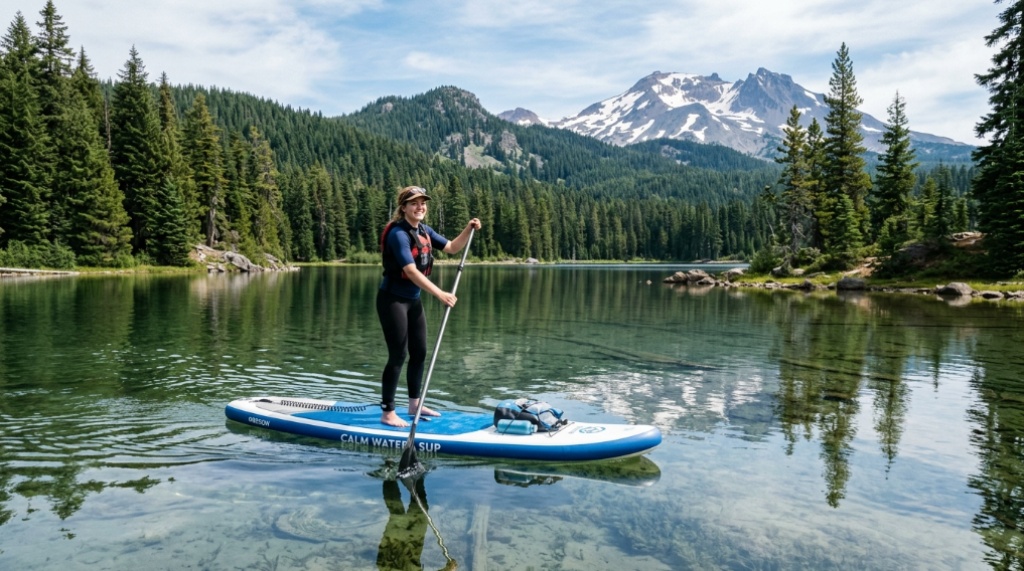
A calm Saturday, a borrowed board, and two options: the glassy lake twenty minutes from town, or the river that looks just as flat from the boat ramp. In Oregon, that choice often decides whether your first paddle is relaxing or genuinely risky.
Lakes and rivers behave nothing alike, even when they look similar from shore. Current, water temperature, wind exposure, and what happens when you fall in all change between the two. Oregon adds its own variables — snowmelt-fed rivers that stay cold in July, afternoon winds that turn open lakes choppy, and boating rules that apply to paddleboards the same way they apply to kayaks. If you’re still choosing a board, a Cool Surfing Gear Review of beginner inflatable paddle boards can help you avoid buying something that only works well on one type of water. But the water itself matters more than the board.
Quick Answer
For a true beginner in Oregon, start on a lake. Lakes have no current, so falling in is a minor inconvenience rather than a situation that carries you downstream. Move to rivers only after you can paddle in a straight line, turn reliably, and self-rescue on flat water. When you do move to rivers, choose a wide, slow stretch with easy bank access — not a canyon run with log jams and rapids.
Key Takeaways
- Lakes remove the single biggest beginner risk — current — and let you practice balance, turning, and falling safely.
- Oregon rivers fed by snowmelt stay dangerously cold even in midsummer, which changes how your body responds to a fall.
- Oregon treats paddleboards as boats on the water, so PFD, sound-signal, and invasive species permit rules apply.
- Wind, not current, is the most common problem on Oregon lakes, especially on large open water in the afternoon.
- River paddling is not just “lake paddling with a current” — it requires reading the water and planning where you can exit.
Why Oregon Makes This Decision Harder Than It Looks
Oregon has an unusual mix of water. Within a two-hour drive you can find a warm, shallow reservoir, a snowmelt river running at 50°F in August, a wind-funneled gorge, and a high alpine lake with motor restrictions. Two rivers in the same drainage can behave completely differently depending on which stretch you’re on.
The practical consequence is that “river” and “lake” are less useful categories than the specific stretch of water you’re standing next to. A wide, slow bend of the Willamette near Corvallis is closer to lake paddling than it is to the Deschutes below Bend. A windy afternoon on Detroit Lake can be harder than a gentle Class I river float.
So treat the lake-versus-river question as a starting filter, then narrow it down by asking about current speed, water temperature, wind exposure, and exit points.
Lake Paddleboarding in Oregon: The Beginner Default
Lakes give you a controlled environment. If you fall, you get back on the board in the same spot. If you get tired, you paddle to the nearest shore. That predictability is why lakes are where most people should spend their first five to ten sessions.
What actually causes problems on Oregon lakes
Wind is the main one. Open lakes like Detroit, Paulina, Odell, and Lake Billy Chinook can go from flat to choppy in under an hour as afternoon winds build. On a paddleboard, wind pushes you faster than you can paddle back, and a headwind can make a 15-minute return trip take an hour.
Boat wakes are the second issue. On lakes that allow powerboats, wakes arrive without warning and can knock a standing paddler off balance. Staying close to shore helps, but shallow water near shore is also where you’re most likely to hit submerged rocks.
Lakes that work well for first-timers
- Hosmer Lake — no motors allowed, shallow, and calm, though it is fly-fishing only for anglers and gets busy.
- Waldo Lake — exceptionally clear water with strict motor restrictions, but it is high elevation and stays cold.
- Cultus Lake and Paulina Lake — popular, accessible, and reasonably sheltered in the morning.
- Smaller reservoirs and ponds — often the best first option simply because they are too small for wind to build and too shallow for big boats.
The pattern is consistent: the best beginner lakes are the ones with motor restrictions or limited fetch (the distance wind can travel across open water).
River Paddleboarding in Oregon: More Skill, More Consequence
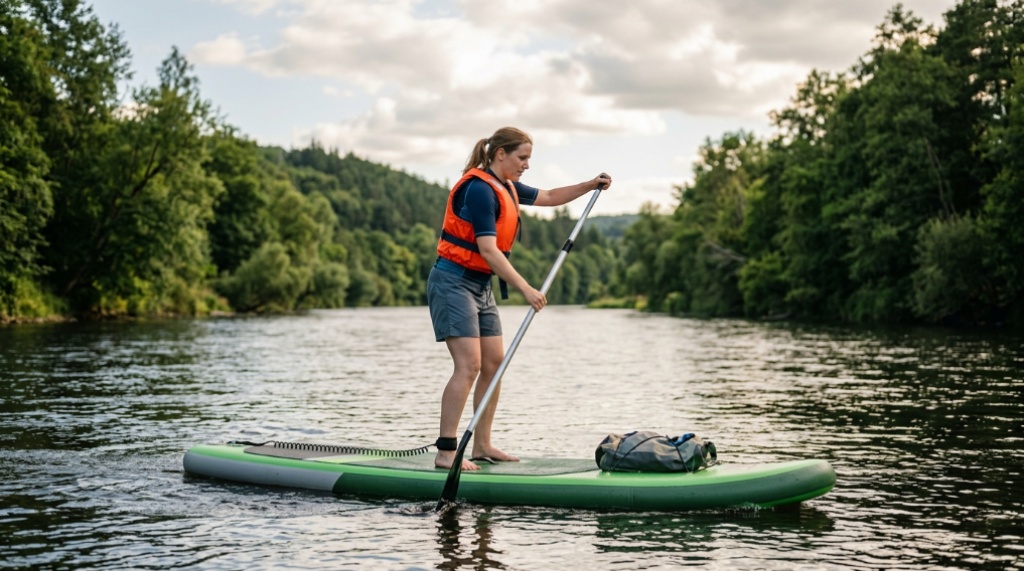
Rivers reward good technique and punish inattention. The water is always moving, which means your mistakes compound instead of resetting. That said, plenty of Oregon river stretches are genuinely beginner-friendly once you have basic board control.
What changes when you move to moving water
You cannot stop. On a lake, you can sit down and drift while you figure things out. On a river, drifting means you’re still traveling toward whatever is downstream — a log jam, a bridge piling, a lowhead dam, or a bank you can’t climb.
The water is colder. Snowmelt-fed rivers like the McKenzie, Santiam, and upper Deschutes run cold year-round. Cold water triggers an involuntary gasp reflex, which is the real danger in a fall — not the swimming itself.
Hazards are physical, not just hydraulic. Strainers (trees with branches in the current), sweepers, and log jams are the classic river hazards. Water flows through them, but you and your board do not. These are the single most common cause of serious river incidents involving paddlecraft.
Exits are limited. On a lake you can almost always reach shore. On a river, banks may be steep, brushy, private property, or lined with blackberry. You need to know your takeout before you put in.
River stretches that suit newer paddlers
Wide, slow, meandering stretches with public access at both ends are the right starting point. The Willamette River through Eugene, Corvallis, and the Portland area has long, gentle sections. The upper Deschutes near Bend is calm in places before it steepens. The Rogue and the lower Deschutes have sections with real rapids that beginners should avoid entirely.
Oregon has designated water trails, including the Willamette River Water Trail, which map access points and identify calm stretches — a much better planning tool than guessing from a map.
Lake vs. River: Side-by-Side Comparison
| Factor | Lake | River |
|---|---|---|
| Current | None to minimal | Constant; speed varies by stretch and flow |
| Water temperature | Warmer in summer, varies by depth and elevation | Often cold year-round when snowmelt-fed |
| Biggest hazard | Wind, chop, boat wakes | Strainers, log jams, rapids, limited exits |
| Recovery after a fall | Easy — you stay in place | Harder — current moves you and your board |
| Skill required | Basic balance and turning | Basic skills plus water reading and eddy awareness |
| Best use | First sessions, fitness paddling, families | Once you can control direction and self-rescue |
How to Decide Which One Fits You Right Now
Answer these four questions honestly before you load the board.
- Can you stand, paddle straight, and turn without falling on flat water? If not, stay on lakes.
- Can you get back on your board from deep water? If you have never practiced this, do it on a lake first. It is much harder in current.
- Do you know where you would exit the river? If you cannot name a specific takeout, you are not ready for that stretch.
- Is the water cold enough to take your breath away? If yes, add a wetsuit or drysuit and a PFD you will actually wear.
A useful middle step is a slow, wide river with a shuttle and a short float — an hour or less. It builds moving-water comfort without committing you to a long day.
Gear and Legal Differences You Shouldn’t Ignore
Oregon classifies paddleboards as boats when they are on the water, which means the same basic equipment rules apply whether you’re on a lake or a river.
- PFD: A properly fitting life jacket is required for each person on board, and children 12 and under must wear one.
- Sound signal: A whistle or similar sound-producing device is required.
- Lighting: If you paddle between sunset and sunrise, you need a light.
- Invasive species permit: Oregon requires an Aquatic Invasive Species Prevention Permit for non-motorized boats 10 feet or longer, which includes many paddleboards.
Beyond the legal minimum, rivers call for a few extras: a quick-release leash or no leash at all in moving water (a standard ankle leash can snag on debris and trap you), water shoes for rocky banks, and a dry bag for a phone and keys, Before heading out onto the water, make sure your equipment is fully protected by checking out our guide on outdoor gear from saltwater corrosion in miami.
Common Beginner Mistakes on Oregon Water
Underestimating afternoon wind. Paddling out with a tailwind feels great until you have to come back into it. Check the forecast and paddle into the wind first.
Wearing an ankle leash on a river. On a lake, a leash keeps your board with you. In current, it can wrap around a submerged branch and hold you under. Use a quick-release waist leash or go without.
Choosing a river by how it looks from the road. Calm surface water can hide strong current and submerged hazards. Flow rates change daily with dam releases and snowmelt.
Skipping the self-rescue practice. Most beginners have never tried to climb back onto their board in deep water. It is harder than it looks, and it is the skill that matters most.
Ignoring water temperature because the air is warm. A 75°F day on a 50°F river is still a cold-water situation.
Frequently Asked Questions
Is it safe for a beginner to paddle a river in Oregon?
On a wide, slow, well-mapped stretch with a known takeout, yes — provided you can already control your board on flat water and you’re wearing a PFD. Avoid stretches with rapids, log jams, or no easy exit until you have moving-water experience.
Do I need a life jacket on a paddleboard in Oregon?
Yes. Oregon requires a wearable, properly fitting PFD for each person on board, and children 12 and under must wear one at all times while on the water.
Which Oregon lakes are best for first-time paddleboarders?
Look for lakes with motor restrictions or limited open water, such as Hosmer Lake, Waldo Lake, and smaller reservoirs. These reduce wind exposure and boat wakes, which are the two most common problems for new paddlers on lakes.
Can I paddleboard on the Willamette River?
Yes. The Willamette has long, gentle stretches through Eugene, Corvallis, and the Portland area that suit newer paddlers. The Willamette River Water Trail maps access points and identifies calmer sections, which makes planning a short float much easier.
What is the biggest difference between lake and river paddling?
Current. On a lake, a mistake costs you balance. On a river, a mistake moves you downstream toward whatever is next. That single difference changes how you plan, what gear you carry, and how much skill you need before you go.
Do I need a permit for my paddleboard in Oregon?
If your paddleboard is 10 feet or longer, Oregon requires an Aquatic Invasive Species Prevention Permit for non-motorized boats. You also need a PFD, a sound-producing device, and lights if paddling after dark.
Conclusion
Start on a lake. Build the skills that actually keep you safe — standing balance, reliable turning, and getting back on the board from deep water — before you add current to the equation. When you do move to rivers, pick a short, wide, slow stretch with a mapped takeout, check the flow and temperature, and dress for cold water even on a hot day. Oregon has excellent beginner water in both categories. The mistake is treating them as interchangeable.