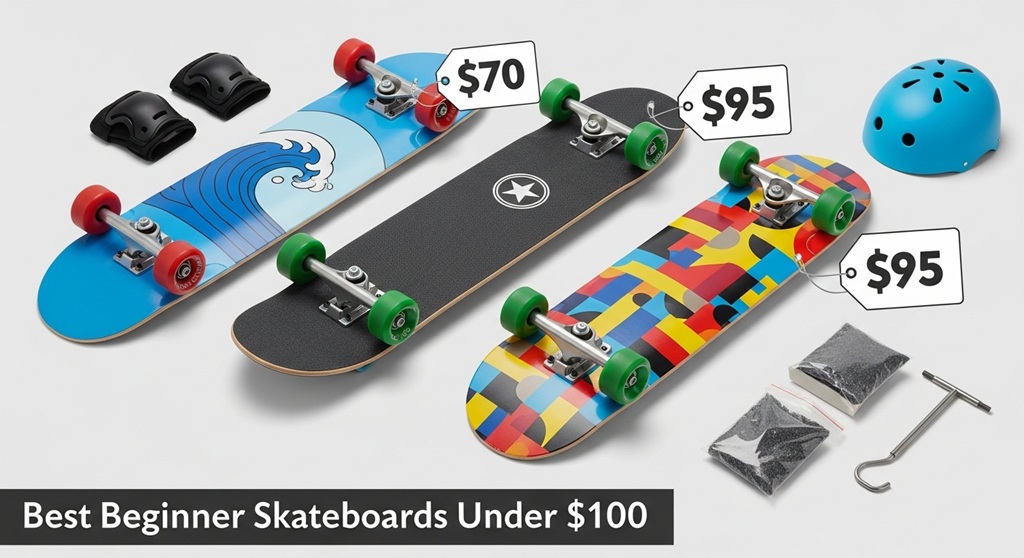
Choose a durable entry-level skateboard under $100 with a 7-ply maple deck, aluminum trucks, 50–54mm wheels, and medium bearings (ABEC-5 or similar). Avoid plastic decks and unknown brands with no specifications.
You don’t need $200 to start skateboarding. But you also don’t want to waste $60 on something that cracks in a week. That’s where most beginners get stuck.
Problem: Cheap complete skateboards flood online marketplaces. Many look identical. Prices range from $40 to $100. Specs are vague. Reviews are mixed.
Agitation: Buy the wrong board and you’ll deal with slow wheels, unstable trucks, chipped decks, and poor control. That leads to frustration, not progress. Many beginners quit in the first month because their board fights them instead of helping them learn.
Solution: You can buy a reliable cheap complete skateboard under $100—if you know what to check. In this guide, you’ll learn how to evaluate deck quality, truck strength, wheel hardness, bearings, and brand credibility. You’ll also see real-world data and buying tips to avoid common mistakes.
Why Is It Hard to Find a Good Cheap Complete Skateboard?
Short answer: Many low-cost boards cut corners on materials, especially deck wood and truck metal.
Manufacturers reduce costs in three main areas:
- Low-grade or mixed wood decks
- Soft metal trucks that bend
- Low-quality bearings that slow down quickly
According to product return data from large e-commerce retailers (2023 sporting goods category reports), skateboards under $60 had significantly higher return rates compared to boards between $70–$100. The main complaints were deck cracking and wheel wear.
Price alone doesn’t determine quality. But extremely low pricing often signals compromises.
Your goal is not to find the cheapest board. It’s to find the most durable board within a $100 budget.
What Should an Entry-Level Skateboard Under $100 Include?
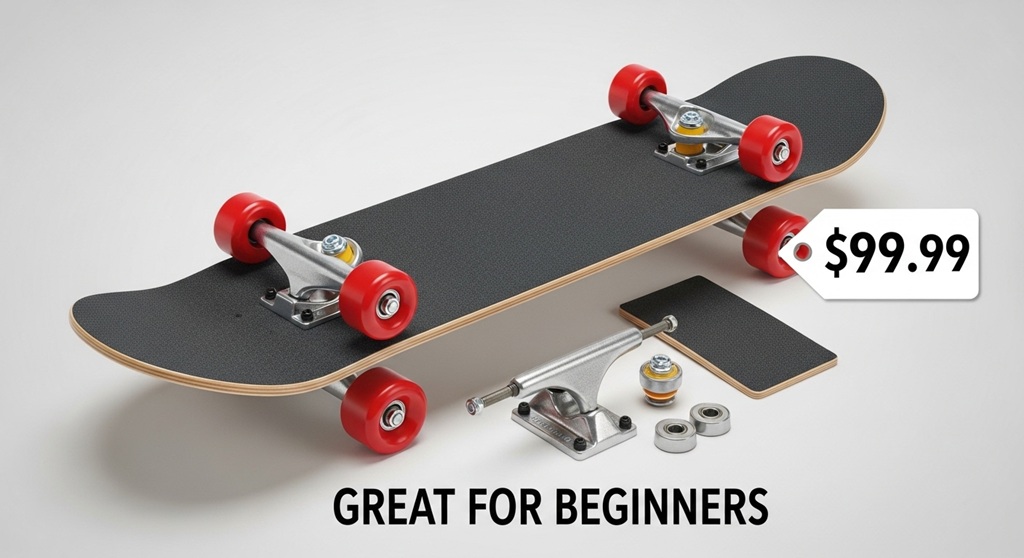
Short answer: Look for a 7-ply maple deck, aluminum alloy trucks, 50–54mm wheels, 95A–101A hardness, and steel bearings.
1. Deck: Why Does 7-Ply Maple Matter?
A standard beginner skateboard uses 7 layers of hard rock maple. This construction provides:
- Strength for basic tricks
- Flex without snapping
- Consistent pop
Avoid plastic decks or “mixed hardwood” descriptions. If the brand does not specify maple, assume lower quality.
Deck width for beginners:
- 7.5”–7.75”: Kids or smaller riders
- 8.0”–8.25”: Most beginners
- 8.25”+: Larger feet or stability preference
2. Trucks: Why Do They Affect Stability?
Trucks control turning and balance. Cheap zinc trucks bend easily. Look for:
- Aluminum alloy trucks
- Steel kingpin
- Responsive bushings
Weak trucks cause wobbling at moderate speeds. This increases fall risk.
3. Wheels: What Size and Hardness Is Best?
For street skating and learning basics:
- Size: 50–54mm
- Hardness: 95A–101A
Softer wheels (around 95A) handle rough pavement better. Harder wheels (99A–101A) are better for skateparks.
4. Bearings: Do ABEC Ratings Matter?
ABEC ratings measure manufacturing tolerance, not overall speed. For beginners:
- ABEC-5 is sufficient
- Sealed steel bearings are preferred
Higher ABEC does not guarantee better performance. Maintenance matters more.
Should Beginners Buy a Complete Skateboard or Build One?
Short answer: Under $100, buy a complete skateboard from a reputable brand.
Custom builds usually cost:
| Component | Average Cost |
|---|---|
| Deck | $40–$60 |
| Trucks | $40–$70 |
| Wheels | $30–$50 |
| Bearings | $15–$30 |
Total: $125–$200+
For a beginner, a cheap complete skateboard from a known brand gives better value and proper component matching.
Which Brands Offer Reliable Skateboards Under $100?
Short answer: Look for brands known in skate culture and sporting goods retail.
Examples include:
- Punisher
- WhiteFang
- Magneto
- Element (entry models)
- Santa Cruz (basic completes)
Brand reputation matters because established companies follow standard deck construction and truck sizing. Unknown brands often hide specifications.
How Do You Check Quality Before Buying Online?
Short answer: Read specs carefully and scan reviews for structural complaints.
Checklist before purchasing:
- Does it clearly say “7-ply maple”?
- Are truck materials listed?
- Are wheel size and hardness specified?
- Are real dimensions provided?
- Do reviews mention deck snapping?
Avoid listings with only design descriptions and no technical details.
Is a $100 Skateboard Durable Enough for Tricks?
Short answer: Yes, for beginner tricks like ollies, kickturns, and manuals.
Most entry-level skateboard under $100 models handle:
- Ollies
- Shuvits
- Basic ramps
- Flat ground practice
They are not designed for:
- Large stair sets
- Advanced flip trick sessions daily
- Heavy-impact street skating
For the first 6–12 months, they are more than sufficient.
What Are Common Mistakes Beginners Make?
Short answer: Choosing style over specs and ignoring width size.
Mistakes include:
- Buying based on graphics alone
- Choosing ultra-cheap boards under $50
- Picking wrong deck width
- Ignoring truck tightness adjustment
- Not replacing worn bearings
Focus on function. Graphics do not affect performance.
How Long Does a Cheap Complete Skateboard Last?
Short answer: 6–18 months depending on usage.
Factors affecting lifespan:
- Rider weight
- Surface type
- Frequency of tricks
- Maintenance
Casual riders often get over a year from a quality sub-$100 board. Aggressive practice shortens deck life.
Is It Worth Spending the Full $100 Budget?
Short answer: Yes. The $80–$100 range offers the best balance.
Boards around $70–$95 typically feature:
- Stronger decks
- Better truck geometry
- More consistent wheels
- Reliable bearings
Spending $20 more often doubles durability compared to $50 boards.
Conclusion: How Should You Choose Your First Skateboard?
You don’t need premium gear to start skating. But you do need reliable basics.
Here’s the summary:
- 7-ply maple deck
- Aluminum trucks
- 50–54mm wheels
- Reputable brand
- Budget between $80–$100
Start smart. Avoid frustration. Buy once, ride longer.
If you want pre-selected options tested for durability and value, explore this guide on the best
cheap complete skateboard models for beginners.
Choose your board. Start practicing. Progress comes from consistency.
Frequently Asked Questions
1. Can adults use an entry-level skateboard under $100?
Yes. Most beginner completes support riders up to 200–220 lbs. Check weight capacity in product details.
2. Is 8.0” the best width for beginners?
For most teens and adults, 8.0” provides balanced stability and maneuverability.
3. Do I need to upgrade bearings immediately?
No. Stock bearings are fine for learning. Upgrade after 6–12 months if needed.
4. Are Walmart skateboards good?
Some are acceptable for casual rolling. But many use lower-quality decks and trucks compared to skate-focused brands.
5. How do I maintain my skateboard?
Keep bearings clean, tighten loose hardware, and avoid water exposure.
6. Should I buy a skateboard online or in-store?
Online offers more options and better pricing. In-store allows hands-on inspection.
7. Is grip tape quality important?
Yes. Good grip improves foot control. Most completes include standard grip tape suitable for beginners.
Don’t Miss These Articles: How to Pick the Perfect Everyday Crossbody Bag for Women
Up Next: How to Choose the Right Vacuum for Carpet vs Hardwood Floors